Short sessions, on purpose
Two hours is the limit, and we spend maybe seventy minutes of it in the water. Children get cold much faster than adults — smaller bodies, higher surface-area ratio — and a cold child stops learning and starts wanting to go home.
Five short mornings beats two long days by a distance. It also means the skill has a night to consolidate between each session, which matters more at that age than at any other.
Ocean skills come first
Day one has very little surfing in it. We spend it on things that are not glamorous but decide whether a child is safe and confident in the water for the rest of their life:
- How to identify a rip current from the beach, and what to do if you are in one.
- How to fall off a board safely — flat, away from the board, hands over the head coming up.
- How to hold your board so it does not hit you or anyone else.
- Where it is safe to be, and where it is not, at this particular beach.
Ratios
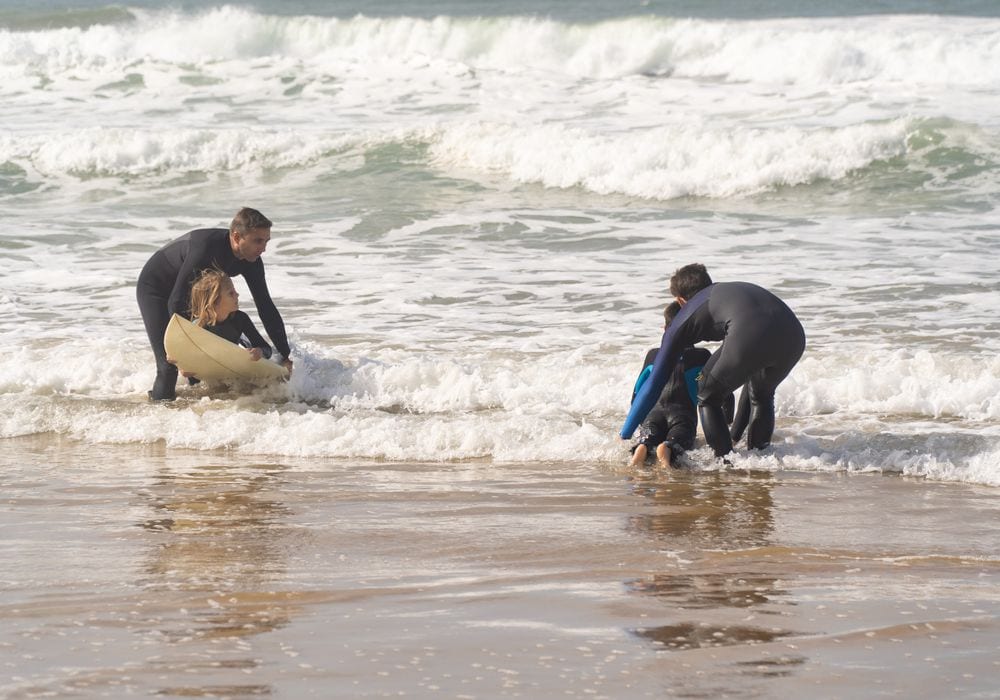
One coach for every three children, always, with an extra coach on the beach watching the whole group. This is more staff than most camps run and it is the main reason our prices are what they are. We are not willing to move on it.
What parents do
You are welcome to stay and watch from the beach, and most parents do on the first morning and then stop by the third. There is a coffee place two minutes away. We ask that you do not coach from the sand — it splits the child.s attention and undermines the coach.
Sunscreen and hoods
Reapply sunscreen before drop-off. We provide wetsuits with hoods for the younger ones — most of a child.s heat loss is through the head, and a hood roughly doubles how long they last in the water.
The last morning
Friday is a low-key session with parents invited into the shallows. There is no competition and no prizes, because we have watched what happens to a seven-year-old who does not win one. They surf, you watch, everybody eats something afterwards.