Reading a beach before you get in
Most ocean incidents are decided before anyone enters the water, by a decision about where to go in. We spend the first hour on the sand learning to read what is in front of us: where the water is going out, where the sandbars are, where the current runs along the beach.
Once you can see a rip from the beach — and it is genuinely learnable in about forty minutes — the ocean becomes a much less arbitrary place.
Rip currents
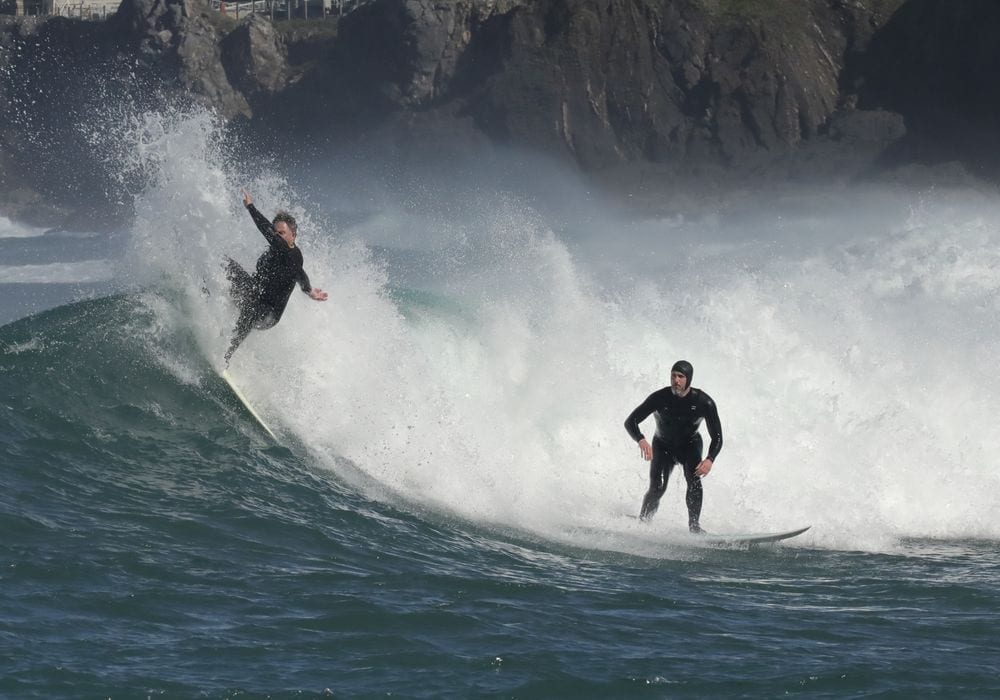
The single most important piece of knowledge on this coast. Rips do not pull you under; they pull you out. They are also the reason surfers can get past the break without exhausting themselves, which tells you something about how to think about them.
- Do not swim against it. You will lose, and the losing is what drowns people.
- Swim parallel to the beach until the pull stops, then come in.
- If you cannot swim out of it, float and signal. Rips weaken and release.
- Learn to spot them: darker water, a gap in the breaking waves, foam moving seaward.
Cold water
Northern California water induces cold-shock gasping in the first minute. That reflex — not the temperature itself — is what makes cold water dangerous. We practise controlled entries so you know what it feels like and can breathe through it.
Helping someone else
The instinct to swim out to a person in trouble kills a lot of would-be rescuers. We cover what to do instead: how to signal, what to throw, when to go and when absolutely not to.
Who this is really for
Parents of kids who surf. People who have just moved to the coast. Swimmers who have had one bad experience and lost confidence. It works for all three, and the last group in particular tends to leave visibly different.