The most common equipment mistake in surfing is buying a board that is too small, too soon, because the small ones look better. It will slow your progress by a year and you will not know that is what happened.
Volume, not length
Length is what people quote, but volume — measured in litres and printed on almost every modern board — is what determines whether it floats you and paddles.
A rough starting point for a beginner: your body weight in kilograms, times about 0.9 to 1.0, in litres. An 80 kg beginner wants something around 72–80 litres. That is a big board. It should be.
Foam is your friend
A soft-top of eight feet or more is the correct first board for almost everyone. They are cheap, they float enormously, they do not hurt when they hit you, and they catch waves you would otherwise miss. They are also not cool, which is the only reason people avoid them.
Keep it for at least a season. Then, when you can catch waves reliably and ride along them, start thinking about something else.
The step down
- Do not drop more than about 10 litres at a time.
- Change one variable per board — length or volume or shape, not all three.
- Buy second-hand. There is a large market and beginner boards take a beating.
- Ride a friend.s board before you buy that model, always.
Fins
Do not think about fins for at least two years. The stock fins that come with the board are fine, and no fin setup will fix a technique problem. This is an area where people spend a great deal of money to solve something that is not their actual limitation.
What we lend
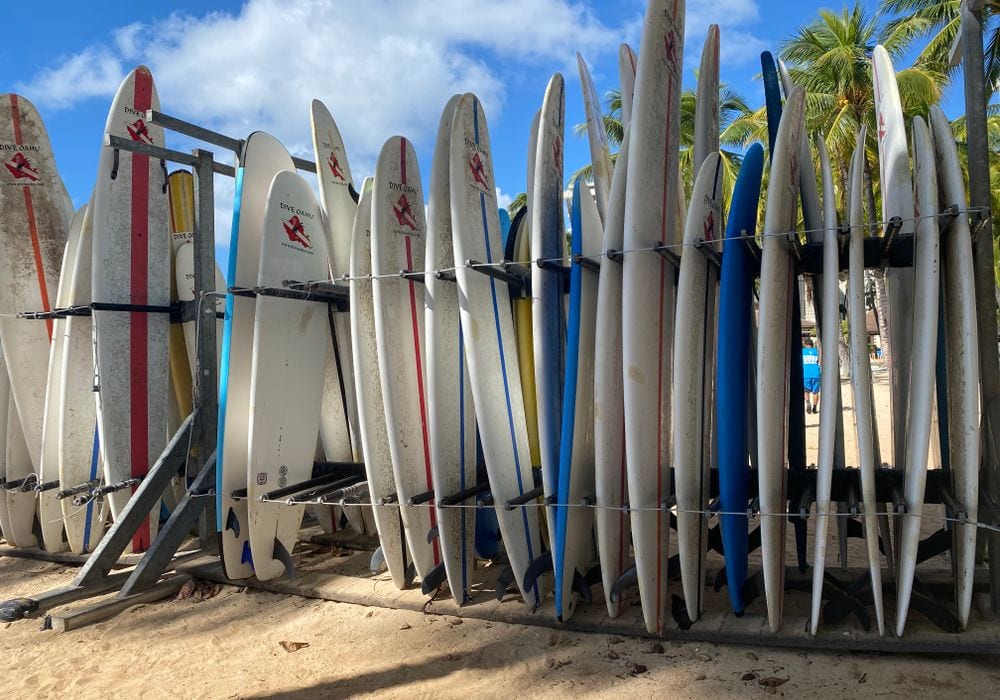
Every course here includes a board matched to your weight and level. If you are thinking about buying, tell the coach — they will put you on two or three different volumes across a session so you can feel the difference before you spend anything.